A guy came in skunked and armed with a chatbot transcript. Peter Bowers sent him back out with a depth change, a fly change, and the one thing AI can't give you: experience.
A guy walked into The Patient Angler last week wearing the particular hollow-eyed look of a man who has been personally rejected by an entire body of water. Waders still dripping on the mat. Net empty. Sunglasses pushed up on his hat like a white flag. He set his rod case on the counter the way you'd set down a bag of regret, looked at Peter, and said one word: "Skunked."
Not just skunked—skunked with confidence, which is somehow worse. He'd done his homework, he said. He'd asked an AI chatbot exactly how to fish East Lake, and the chatbot, bless its overconfident little heart, had given him an answer so clean it looked like a research paper. Bullet points. Bold headers. A section literally titled "Pro Tips." It told him to flip a chartreuse popper around the lily pads and work the boat docks for bedding bass, strip it fast, and focus on early-morning topwater action. He read it off his phone at the counter like he was presenting evidence in a trial.
Peter listened to the whole thing with the patience of a man who has heard a hundred versions of this story, nodded once, and asked the question the chatbot never thought to ask: "Were the fish rising, or were you just casting at water?"
The guy blinked. He hadn't really looked. The chatbot hadn't looked either—hadn't asked about the wind, whether there were bugs hung in the surface film, whether ants and beetles were getting knocked off the pines and blown out onto the lake, or whether the callibaetis were coming off yet. Turns out there's a handful of lakes named "East Lake" scattered around the country, and most of them are warm, weedy bass water back east—lily pads, boat docks, largemouth beds in the shallows. The chatbot apparently grabbed its answer from one of those instead of the volcanic caldera lake in the Oregon high desert that doesn't have a lily pad or a bass. It had scraped together the confident average of a thousand generic "how to fish a lake" articles and handed it back with total certainty, the way a tourist gives directions in a city they've never visited.
Here's what the chatbot didn't know: East Lake's reputation is built on big brown trout and kokanee that cruise the weed flats and drop-offs ringing that old caldera, and this time of year they aren't chasing streamers—they're keyed on the callibaetis hatch, and what the fish are eating changes four separate times over the course of a morning depending on which stage of the bug is on the water. Fish the wrong stage in the right spot and it still looks a lot like being wrong.
It starts before sunrise with the nymphs. Callibaetis nymphs are swimmers, not crawlers, and in the early morning they're darting up out of the weeds toward the surface—work a small olive or gray swimming nymph just off the bottom over the shallow weedy flats on the north and west shores, with a slow hand-twist retrieve, and that's stage one.
As the water warms, those nymphs reach the surface and hang there half-in and half-out of their shucks—the emerger stage—and this is the window that actually gets fish eating with abandon, because a struggling bug can't get away. Fish a low-riding emerger, or a nymph greased to hang in the film, over those same weed flats once the water goes glassy calm, and that's the best hour of the day.
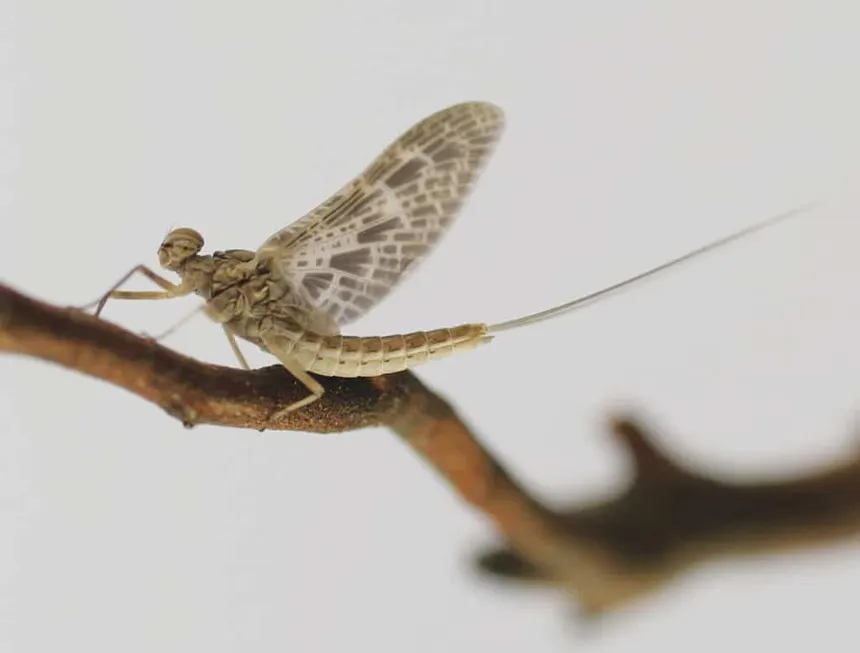
Once the duns pop free and sit up on the surface drying their wings before flying to shore, the rises turn showy—sips and splashy takes on adult mayflies drifting the wind lanes into the coves. That's when a parachute-style callibaetis dun earns its keep, cast to the naturals as they collect and drift toward whichever shoreline the breeze is pushing them.
Then there's a lull. Midday, with no bugs left on the water, the fish tuck under the reef edges and sit tight—and that's where ants and beetles matter more than any mayfly pattern. Afternoon wind off the pines knocks terrestrials into the lake all along the rocky points and undercut banks, and a size 14 black ant or a foam beetle worked tight to that structure will pull fish a bare callibaetis imitation won't touch.
By evening, the spent spinners fall—mated adults dropping dead flush to the surface right back over the same weed flats where the nymphs started the day—and a spent-wing spinner fished dead drift in that low light closes the loop.
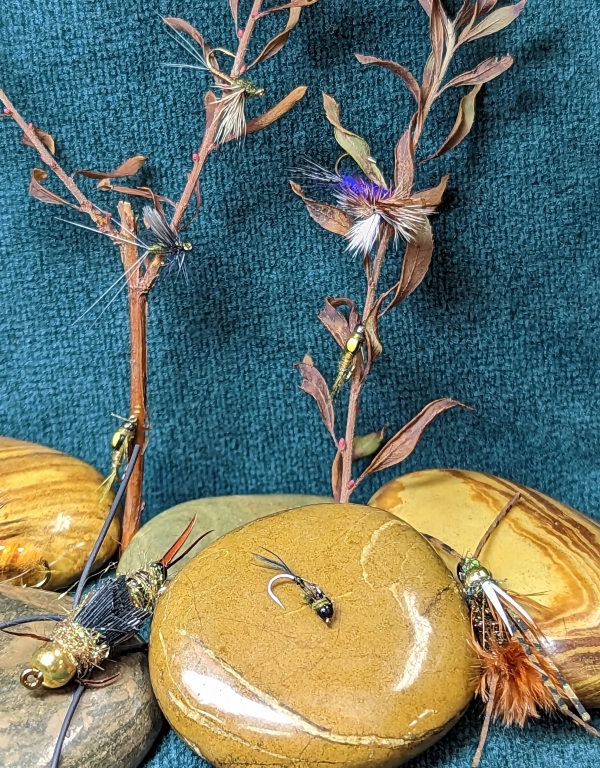
Peter re-rigged the guy's leader right there at the counter—swapped the chartreuse popper for a small callibaetis nymph and a couple of parachute duns, threw in a foam beetle for the midday lull—and told him to be on the weed flats before first light, follow the hatch through its stages as the morning went on, then fall back on ants and beetles along the rocky points until the spinners hit the water at last light. Exactly the kind of hour-by-hour detail an AI summary has no way of knowing, because it isn't standing on the lake watching the bugs change.
He was back in the shop the next afternoon, grinning, holding his phone out again. This time it wasn't a chat transcript—it was a photo of an actual brown trout.
And that's really the whole point. An AI can scrape every fishing forum on the internet and hand you a very confident, very average answer for what generally works on lakes with big trout in them, generally, somewhere. What it can't do is know that the callibaetis are running thick over the weed flats this week, or that the wind is stacking ants and beetles against the north shore rocks by two in the afternoon, or what it feels like to fish the wrong stage of a hatch twice before you figure out why the fish are ignoring you. Real fishing knowledge isn't information you can summarize—it's pattern recognition built from getting your ass kicked by the same lake often enough to learn its moods. That doesn't fit in a bulleted list. But it does live at a fly shop counter in Bend, and it's free if you just ask.